
Books to Help You (Actually) Understand and Critique AI
You know it’s bad, but do you really know how artificial intelligence and data centers work?

I’ve always been wary of AI, even before I understood it. Whenever the wealthiest people froth at the mouth, I take it as a warning sign. I didn’t need to know the mechanics of the technology to know nothing good comes from the powerful launching new technology. (The last digital boom eroded election security and platforms Trump.)
As AI has traveled like kudzu consuming us from ChatGPT to AI startups in medicine, public safety, and education, the stakes have never been higher. Now we see the writing on the wall: AI data centers depleting water sources and straining electrical grids; ineffective facial recognition technology; algorithmic bias; and thousands of jobs lost to AI. It’s not enough to have a gut feeling that AI is bad. I wanted to really understand what artificial intelligence is, how it works, why data centers operate the way they do, what other parts of the supply chain are being hidden from the general public, and how do we curtail the harm. Of course, I turned to books.
Below are 5 books I’ve been reading and would recommend you purchase or borrow from the library. Stay woke, friends.
A Kids Book About AI — Dr. Avriel Epps
I’m a firm believer that if you can’t explain something to a child, you dont really understand it yourself. Adults hide behind big words and virtue signaling but if you really want to know the basics of AI and how we relate to it, Dr. Avriel Epps’ children’s book is a great primer for the entire family or community.
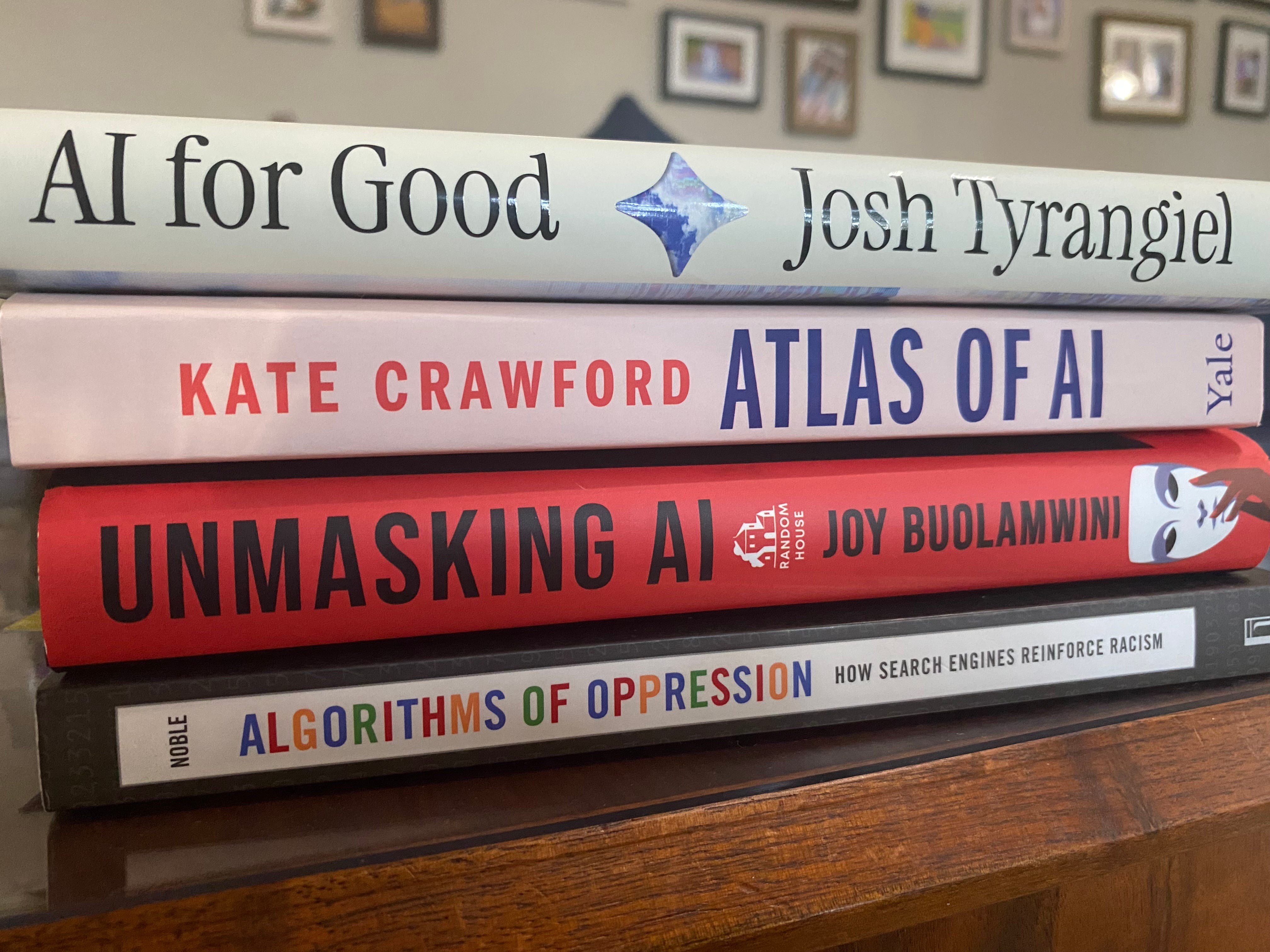
Unmasking AI: My Mission to Protect What Is Human In A World of Machines — Joy Buolamwini
This book is part-memoir, part exploration of racism in AI, which makes for a really accessible read on the way racism is embedded into AI tools by the designers, coders, and everyday people who input their own biases onto the technology. Through this Black woman’s journey, we share in her anger, a-ha moments, and troubleshooting. She illuminates not only the problems, but also potential fixes and how her work as a digital activist and founder of Algorithmic Justice League is rolling up their sleeves.
Atlas of AI: Power, Politics, and the Planetary Costs of Artificial Intelligence — Kate Crawford
After those first two reads, you’ll have a good understanding of why the technology is unethical from a sociopolitical standpoint. Crawford’s Atlas of AI goes beyond the question “Is AI bad for society?” and explores why AI is bad for the planet. This is where we dig into the environmental impacts of AI, the exploitative mindsets undergirding the entire industry, and how we rein it in.
Algorithms of Oppression: How Search Engines Reinforce Racism — Safiya Umoja Noble
This book isn’t technically about AI but is an early example of how Black researchers have been sounding the alarm of racism in tech. When we ignore the warning signs, we get a full-blown disaster. Safiya Umoja Noble’s book explores the root causes of racism in algorithms and helps us understand how it’s gotten so out of control now.
AI For Good: How Real People Are Using Artificial Intelligence To Fix Things That Matter — Josh Tyrangiel
OK, enough depressing material. AI founders do a lot of bad, and the technology is too half-baked to be rolled out as widely as it is, BUT there are some glimmers of hope. This book has been important for me because the answer doesn’t need to be all or nothing with AI. There are ways to operate data centers in more sustainable ways and regulate the algorithms to avoid prejudice from becoming further entrenched. It’s worth investing in those paths because AI as a tool should be leveraged towards greater quality of life for us all.
Have you read any of the above or have other suggestions on books to read? Let’s talk in the comments